
Razer Boomslang 20th Anniversary: Birth of the Gaming Mouse Legacy
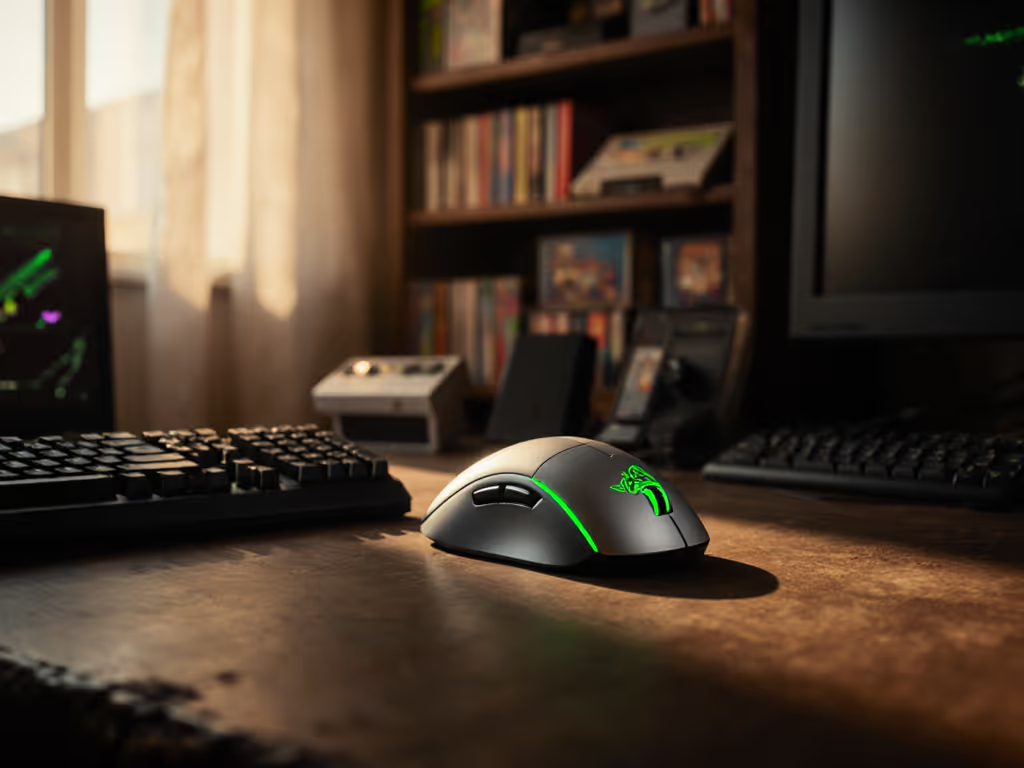
The Razer Boomslang 20th Anniversary Edition isn't just nostalgia, it's a masterclass in how purposeful geometry launches industries. To understand its significance, we must revisit the Razer Boomslang history: a 1999 anomaly that defied beige office peripherals with a translucent snake-head silhouette and 2,000 DPI precision when competitors limped at 400. For a broader context on how mouse technology progressed from those early days, see our evolution of gaming mice timeline. But beyond specs, its true legacy lives in an often-overlooked detail: a symmetrical shell that finally respected hands, not just right-handed ones. Control starts with fit, and this mouse proved that alignment between biology and tool isn't optional. It's foundational.
Why Was the Original Boomslang Revolutionary?
In 1999, "gaming mouse" was an oxymoron. Standard mice featured:
- Beige ball-tracking capped at 400 DPI (marketing called this "high-precision")
- Zero programmability: no DPI toggles, macros, or even USB connectivity
- Ergonomic neglect: Skewed right-handed contours that punished lefties and small-handed players (sub-170mm palm length)
The Boomslang shattered all three. Its 2,000 DPI mechanical sensor delivered 5x the tracking resolution, while the now-iconic translucent shell housed the first-ever on-the-fly sensitivity switch. But the quiet revolution was its true ambidextrous form, a low-profile, 68mm-wide chassis with side buttons centered on the waistline. For left-handed gamers like my younger self, this wasn't just convenient; it eliminated the micro-adjustments that eroded aim. No more fighting the shell's asymmetry during clutch flicks. Suddenly, geometry served the hand, not vice versa. If you need truly symmetrical designs, check our best ambidextrous picks for left-handed gamers.
How Did It Champion Inclusive Design?
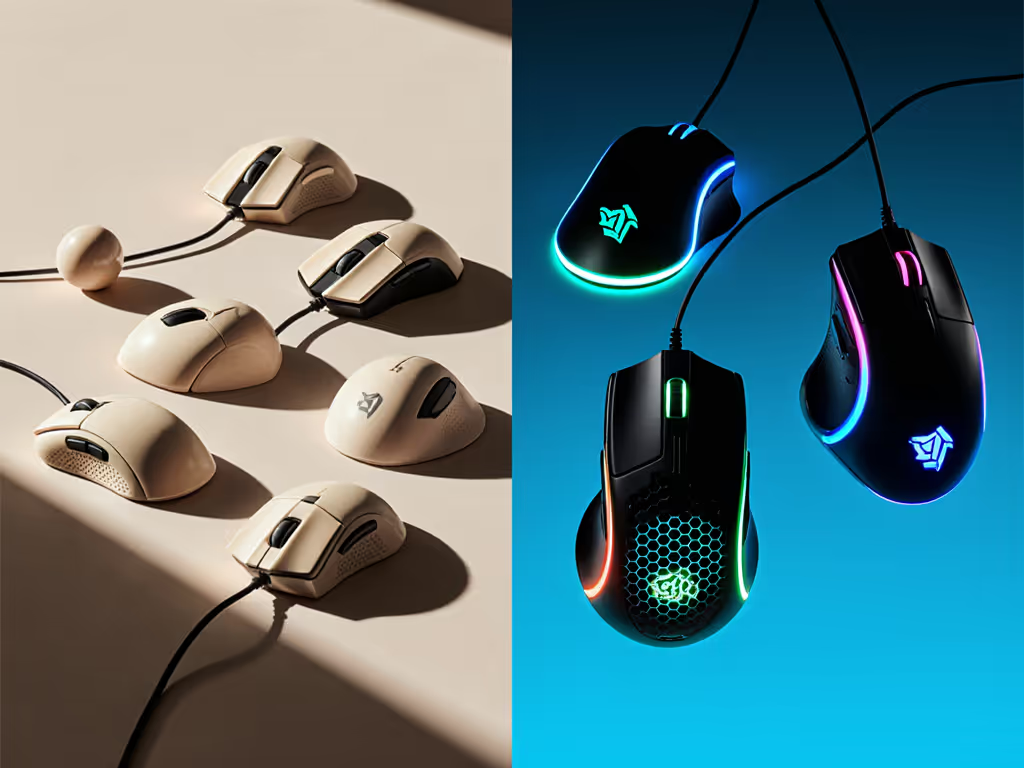
Modern "ambidextrous" mice often still favor right-handers via misplaced side buttons or hump placement. Not the Boomslang. Its design DNA centered three fit-critical principles:
- Symmetry Without Compromise: Side buttons sat precisely 25mm from the central axis (measured fingertip-to-button edge), ensuring identical reach for left/right grips. Contrast this with later "semi-ambi" models like early DeathAdders where right-side buttons jutted 5-7mm farther forward.
- Small-Hand Viability: At 120mm length × 68mm max width, it accommodated palms under 160mm without forcing fingertip grip, a rarity when competitors targeted "average" (read: large) male hands.
- Neutral Hump Geometry: The subtle 15mm rear hump avoided aggressive curvature, letting claw/fingertip grippers rest without tension points. For my 152mm palm, this meant zero pinky drag during 4-hour sessions.
True ambi isn't compromise; it's alignment between hand and target.
This wasn't accidental. Razer's "For Gamers. By Gamers" ethos meant solving actual pain points, not manufacturing them. When most brands treated left-handed players as an afterthought, the Boomslang's shell declared them primary users. That parity in control remains why collectors covet it today.
What Does the 20th Anniversary Edition Teach Us?
Limited to 1,337 serialized units, the new edition isn't a museum piece. It's a bridge between past and present, proving viable legacy requires evolving without sacrificing core geometry. While upgraded with a 45K DPI sensor and 8,000 Hz polling (specs dwarfing 1999's), it retains the original's 68mm width and symmetrical button layout. Curious whether 4K–8K polling is actually noticeable? See our 8000Hz lag tests. Why?
Because Razer heritage understands that tech leaps mean nothing if the foundation ignores biology. A 45,000 DPI sensor can't fix tracking errors from a shell that shifts in your grip. Faster polling won't eliminate overflicks caused by uneven side-button reach. This ethos directly addresses modern gamers' top pain points: "buying mice online without knowing if the shape fits" and "inconsistent aim due to shape mismatch."
The anniversary edition's brilliance lies in what wasn't altered:
- Width consistency: Still 68mm at its widest point, critical for small-hand gamers where 1-2mm changes cause slippage
- Centered side buttons: Unchanged 25mm reach metric from central axis
- Low-profile silhouette: 38mm max height accommodates claw/fingertip grips without straining knuckles
Why Geometry Still Trumps Specs in 2025
Today's gaming mouse market drowns players in "esports-grade" jargon while ignoring fit fundamentals. Consider these realities:
- A 4K polling rate (4,000 Hz) only matters if your hand stays stable, a shell mismatch adds 5-10ms of unintentional movement before the sensor even processes input
- "Lightweight" mice (sub-60g) often sacrifice width for weight, pushing small-handed users into fingertip grip stress
- Coatings promising "super-grip" can create drag hotspots on asymmetrical shells, forcing constant hand repositioning
Meanwhile, the Boomslang's legacy proves it isn't about chasing bleeding-edge numbers. It's about solving the root problem: your hand's relationship to the tool. When geometry respects your palm length, grip style, and finger spread, specs become amplifiers, not bandaids. For sizing and posture fundamentals, start with our ergonomics by hand size guide.
For left-handed gamers or those with sub-170mm hands, this is existential. One streamer I coached (158mm palm, left claw grip) cycled through 7 "ambidextrous" mice before finding the Anniversary Edition's authentic symmetry. Her micro-adjustments vanished overnight because the shell didn't fight her natural hand position. That's the promise of inclusive design: control that feels invisible.
The Enduring Lesson: Fit as the First Spec
The Razer Boomslang 20th Anniversary launch isn't just corporate nostalgia. It's a litmus test for the entire industry. Will we keep prioritizing DPI wars over ergonomic honesty? Or finally accept that control starts with fit?
Next time you see "best gaming mouse" lists, ask:
- Is width measured at palm rest (not nose tip)?
- Do side buttons have identical reach metrics for both hands?
- Are small-hand variants truly scaled, not just shrunk with filler?
Until brands answer these, you'll keep building drawer graveyards. The Boomslang's 25-year relevance proves that when geometry respects the hand, it becomes legacy, not inventory.
Further Exploration:
- Trace your hand: Compare your palm length (wrist crease to middle fingertip) against mouse width charts
- Test symmetry: Place shells on graph paper. Do side buttons align perpendicular to center axis?