Mouse Grip Textures: Science Behind Matte vs Rubberized Coatings
By Noah Mensah • 31st Mar
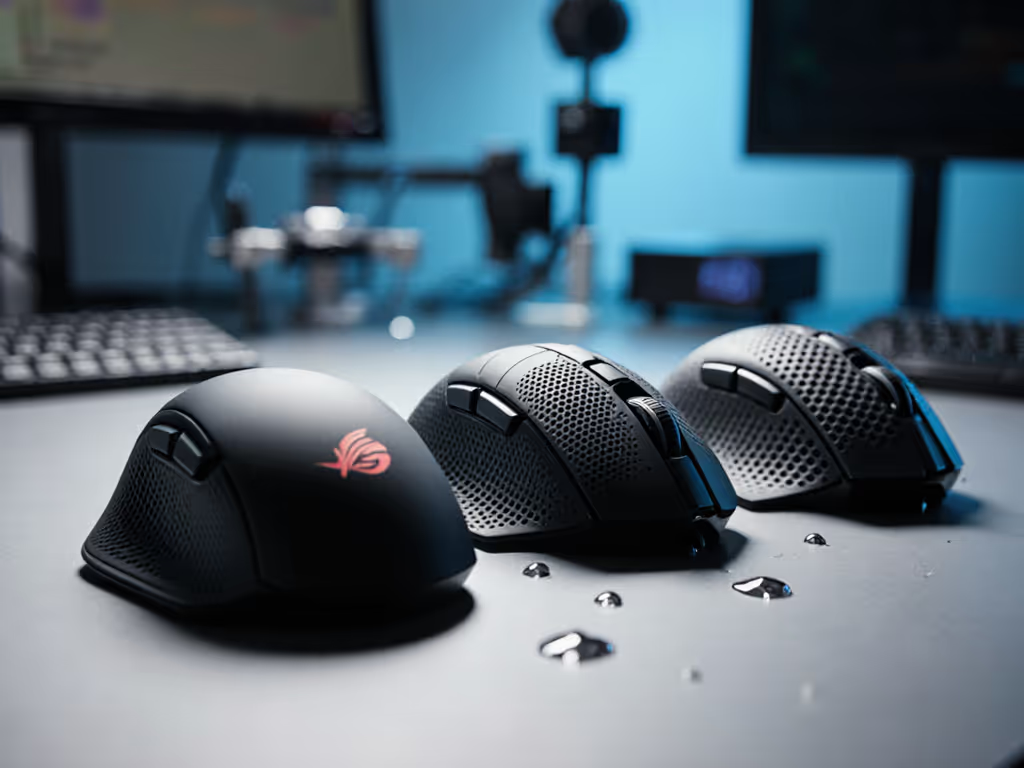
The texture of your mouse shell determines how consistently your hand maintains contact with the device under the demands of competitive play. Matte and rubberized coatings are engineered to manage friction differently, and understanding the material science behind them directly impacts grip stability, fatigue, and ultimately, aim consistency.
Understanding Grip Surface Physics
When your skin contacts a mouse surface, the interaction is governed by the coefficient of friction (a measurement of how much grip resistance exists between two materials). This value is not static; it changes dynamically based on moisture, temperature, pressure, and surface topography.
Dry plastic surfaces typically maintain a friction coefficient around 0.3, meaning they're relatively slick even under ideal conditions. When sweat or skin oils enter the equation, this value can plummet to 0.15, creating what players describe as the "slick" feeling during extended sessions. This degradation creates a vicious cycle: as grip security decreases, your hand automatically applies greater squeeze force to compensate, accelerating muscle fatigue and raising repetitive strain risk.
The stakes are measurable. Research on grip-related strain assigns a Strain Index score to high-intensity gaming. For competitive players with high APM (actions per minute), sweat-induced grip loss can push this score significantly above hazardous thresholds. The coating on your mouse is not an aesthetic detail. It is a fatigue management tool.
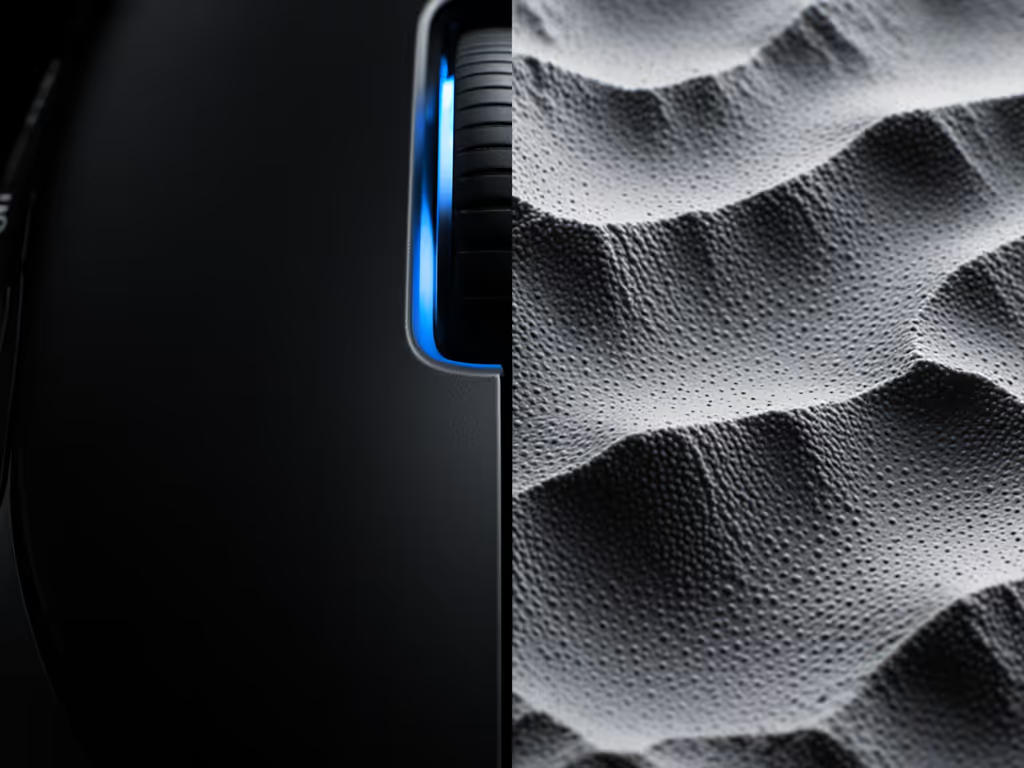
Matte Textures: Stability Through Micro-Channels
Matte coatings, typically applied to plastic (ABS/PBT) or metal substrates, create a rough surface topography at the microscopic level. This roughness serves a practical function: it prevents direct skin-to-material contact from becoming uniform, which is what causes slipperiness.
Under dry conditions, textured matte surfaces maintain friction values in the 0.4-0.5 range, substantially higher than smooth plastic. The texture acts as a mechanical brake. However, matte coatings have a critical vulnerability: once skin oils and acidic sweat accumulate on the peaks of the texture, they form a thin film that gradually fills the micro-channels. Over a 4-6 hour session, many matte surfaces develop what experienced gamers call "shiny spots" (areas where repeated hand contact has polished the texture smooth, reducing friction precisely where you grip most). For full upkeep beyond quick wipes, follow our seasonal maintenance guide.
Durability testing shows matte coatings wear visibly over months of use, transitioning from uniform grip to inconsistent friction zones. This inconsistency is a hidden performance killer. Your brain learns to stabilize aim based on tactile feedback. When that feedback becomes patchy (firm in one spot, slippery in another), micro-correction accuracy suffers.
Matte Performance Checklist
- Dry friction: High (0.4-0.5) for the first 2-3 weeks
- Damp friction: Moderate (0.25-0.35) once oils accumulate
- Session length before shine: 50-80 hours of competitive play
- Maintenance: Requires periodic surface cleaning (alcohol wipe) every 1-2 hours during long sessions to sustain grip
- Wear pattern: Non-uniform; high-contact zones lose texture first
Rubberized Coatings: The Grip Paradox
Rubberized or soft-touch coatings feel immediately tactile and secure. They achieve high initial friction by creating a compliant (soft, slightly sticky) surface that conforms to skin irregularities. Under laboratory conditions, rubberized surfaces can maintain friction coefficients around 0.5-0.6 even when damp, outperforming matte coatings.
The problem emerges over time. Soft rubber coatings are prone to surface degradation. Repeated hand sweat exposure causes the rubber binder to break down, leading to delamination or a "tacky" buildup that eventually feels more slippery, not less. Additionally, rubber absorbs oils and moisture, which can trap contaminants against the skin, potentially worsening grip in extended sessions.
Rubberized coatings also present a thermal liability. Learn how mouse cooling affects sensor accuracy for long sessions. They tend to warm up under hand pressure and don't dissipate heat as efficiently as harder surfaces like anodized magnesium or carbon fiber. For players with hyperhidrosis (excessive sweating), this warmth can accelerate sweat production, triggering the friction decline they're trying to avoid.
Rubberized Performance Checklist
- Dry friction: Very high (0.5-0.6) initially, creating a "locked-in" feel
- Damp friction: Moderate-to-high (0.35-0.5) longer than matte, but degrades faster over weeks
- Session length before degradation: 30-60 hours before noticeable stickiness or slickness emerges
- Maintenance: Requires frequent cleaning; trapped moisture worsens decay
- Wear pattern: Uniform degradation across entire surface; feels slick after 2-3 months of heavy use
Advanced Materials: The Textured Composite Alternative
Textured carbon fiber and anodized magnesium surfaces represent a third approach. Carbon fiber weaves create inherent micro-channels that allow moisture to reside between skin and resin contact points, keeping the grip zone relatively dry. Anodized magnesium forms a protective oxide layer that stabilizes friction even when damp, maintaining values above 0.45 in sweat conditions.
These materials sacrifice the initial "soft" feel of rubberized coatings but deliver consistency. Dive deeper into modern gaming mouse materials and how they influence durability and grip. Testing shows they maintain uniform friction across 100+ hour play sessions without visible shine spots. The tradeoff: higher material cost and, in the case of magnesium, the need for occasional wiping to prevent oil buildup on the oxide layer from becoming paradoxically slick.
Real-World Grip Testing: Drill-Backed Validation
Theory matters, but so does habit validation. Here's a coaching approach to test which texture stabilizes your routine:
Pre-test baseline: Spend three days (15+ hours) with your current mouse, running a consistent Kovaak's tracking scenario (e.g., Thin Aiming v2 200%) daily for 10 minutes. Record your score and note hand fatigue on a 1-10 scale.
Test period: Introduce a new mouse with a different coating (matte to rubberized, or vice versa). Use identical settings (sensitivity, DPI, poll rate, LOD). If LOD and sensitivity tuning are new to you, see our lift-off distance guide for step-by-step setup. Run the same Kovaak's session daily for two weeks. A coach I worked with tested three shapes this way: one low-profile with matte texture, one with rubberized coating, one with carbon fiber. After two weeks, the medium-low profile with stable friction clicked. His Kovaak's tracking score rose 6%, and VOD analysis showed fewer micro-corrections. The hand was making intentional moves instead of constant grip adjustments.
After-test metric: Compare your Kovaak's score and fatigue rating to baseline. A 3%+ improvement, paired with lower fatigue, suggests the texture is stabilizing your mechanics. A decline or fatigue increase signals a poor fit, regardless of how it feels in the first hour.

Matching Texture to Your Gaming Context
Texture selection depends on two factors: your hand's moisture profile and your play duration.
Low-moisture hands, sessions under 4 hours: Matte or rubberized coatings deliver sufficient stability. Matte is more durable; rubberized feels more immediate. Neither requires mid-session maintenance.
High-moisture hands or sessions exceeding 4 hours: Textured composite materials (carbon fiber, anodized metal) or well-engineered matte surfaces designed for competitive play become necessary. These maintain friction consistency across long tournaments or streaming marathons.
Hyperhidrosis or esports-level play: Carbon fiber or textured magnesium are the only coatings consistently tested to hold friction above 0.45 under sustained sweat exposure. Budget for the material cost; it's an investment in consistency.
The Durability Reality Check
Matte coatings typically remain uniform for 50-100 hours before visible shine spots emerge. Rubberized coatings degrade faster, showing stickiness or slickness within 30-60 hours. Composite materials can exceed 100 hours with minimal visible wear.
If you compete or stream for 20+ hours weekly, expect to replace or refresh a matte-coated mouse every 2-3 months. Rubberized will require replacement or refinishing monthly. Composite materials stretch that window to 4-6 months or longer.
Gear is a multiplier; habits and fit set the baseline.
No texture will fix a grip that's wrong for your hand or play style. Start with a proper grip style fit guide to match shape to your hand. But the right texture (one that maintains consistent friction through your typical session) removes a variable that otherwise forces constant micro-corrections and grip compensation.
Your Next Step: Diagnostic Testing
Before buying a new mouse solely for its coating, run a controlled test with a mouse you already own:
- Clean the surface thoroughly (alcohol wipe to remove oils and dust)
- Establish a baseline drill score using a tracking or precision scenario in Kovaak's or Aim Lab, recorded daily for 3 days
- Play a competitive match or scrim, noting at what point (if any) your hand loses grip security
- Repeat the drill 2-3 days later without mid-session cleaning and observe friction change
If grip degradation occurs within 2 hours, your current texture is a liability. If it holds through your typical session, the coating is doing its job. Do not chase an upgrade just for feel. If degradation is slow but steady, schedule preventive surface cleaning (a quick alcohol wipe) every hour during long sessions.
This data-driven approach beats chasing every new coating trend. Once you've identified the texture behavior that stabilizes your aim routine, you have a repeatable specification for your next mouse purchase, and a clear reason why it matters.
Related Articles