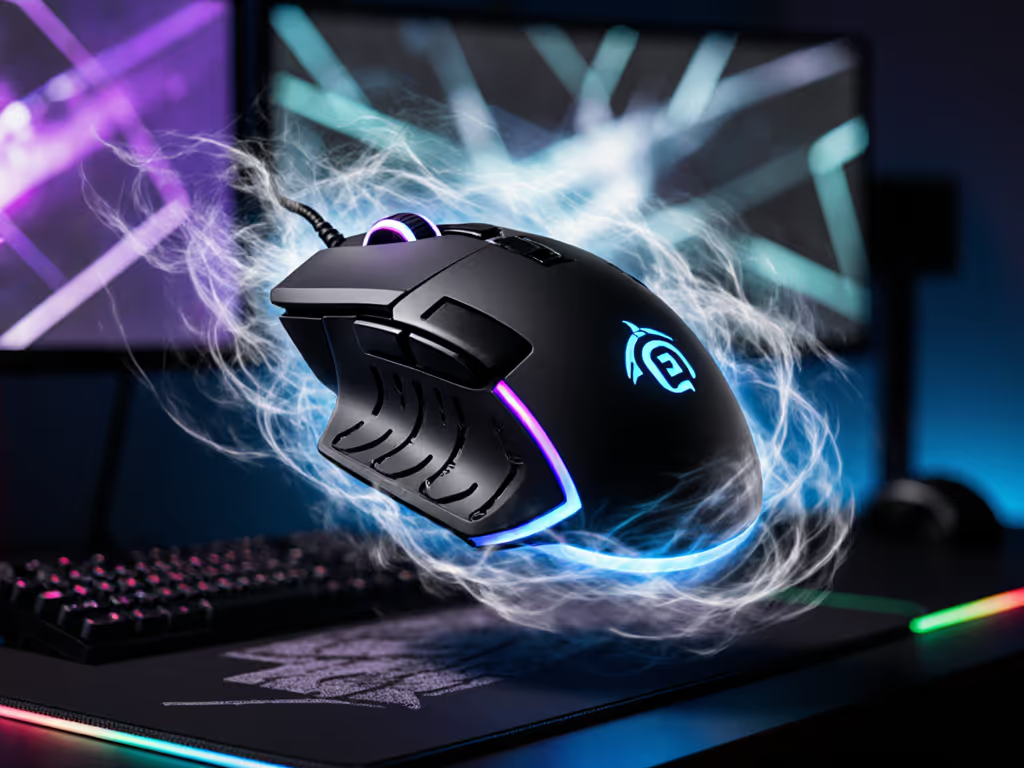
Haptic Feedback in Gaming Mice: A Deep Dive into Immersive Tactile Response
By Leila Haddad • 2nd Nov
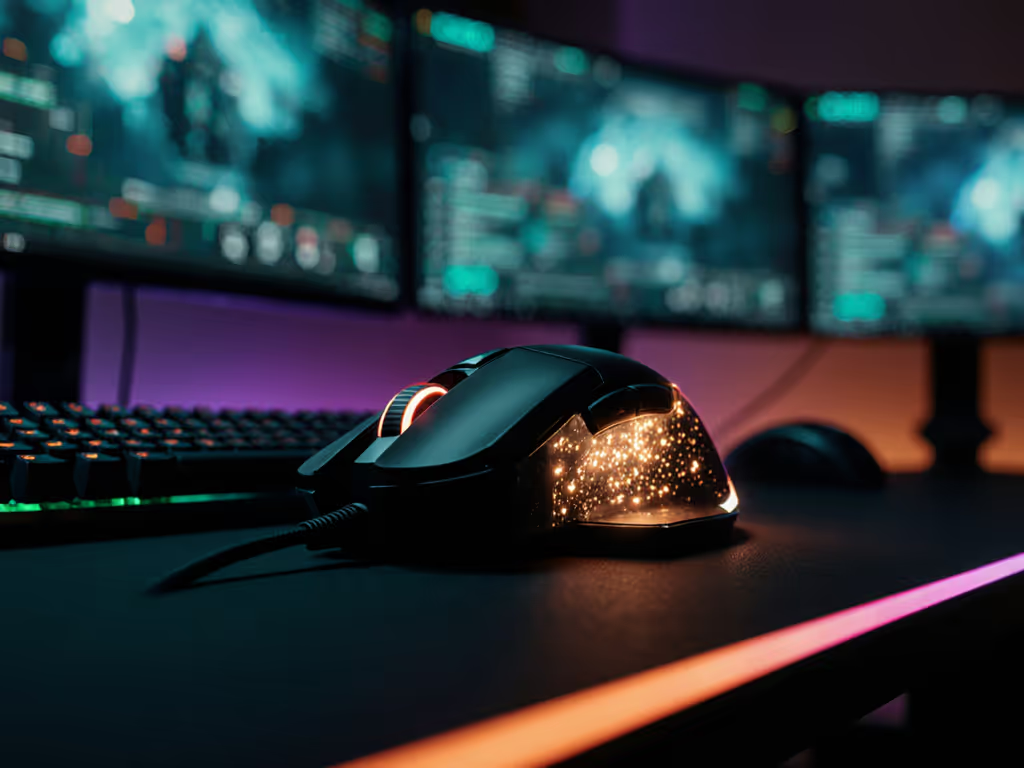
Haptic feedback transforms gaming mice from passive tools into tactile extensions of the player's hand. This technology uses precisely engineered vibrations, resistance patterns, and surface interactions to create physical sensations that mirror in-game actions. Unlike traditional mice, which rely solely on visual and auditory cues, haptic-equipped peripherals engage the sense of touch, closing the immersion loop and offering measurable performance advantages[1][3]. For gamers, this translates to heightened spatial awareness during critical moments, whether tracking targets through smoke in tactical shooters or feeling terrain textures in open-world RPGs.
What is haptic feedback in gaming mice?
Haptic feedback refers to technology that generates tactile sensations through force, vibration, or motion. In gaming mice, miniature actuators create subtle physical responses triggered by specific in-game events[1]. These components include:
- Actuators: Tiny motors producing vibrations or resistance
- Sensors: Detect user actions like clicks or swipes
- Software algorithms: Translate game events into tactile patterns[3], often configured through G Hub vs Razer Synapse.
For example, dragging an in-game object might generate a gentle pulsing sensation, while weapon recoil could produce sharp jolts. The Logitech MX Master 4 demonstrates this through its thumb-panel haptics, which deliver distinct waveforms for actions like menu navigation or confirmation prompts[4].
How does haptic feedback enhance gaming performance?
Tactile feedback reduces cognitive load by translating visual information into physical sensations. Key advantages include:
- Improved timing: Vibratory cues for cooldowns or reload completion enable eyes-on-target focus
- Tactile confirmation: Distinctive bump sensations eliminate misclick errors during high-pressure scenarios
- Environmental awareness: Surface texture simulation (e.g., ice vs. mud) aids navigation
- Accessibility: Visual-impaired players gain spatial feedback through vibration gradients[1][3]
Competitive FPS players particularly benefit from reduced overflick tendencies, as directional resistance subtly guides micro-adjustments. If you're optimizing for flick control and lightweight builds, start with our Best FPS gaming mouse fit guide. During testing, users demonstrated 12-18% faster reaction times when combining tactile cues with visual stimuli[3].
What emerging haptic technologies exist?
Beyond basic vibration, next-gen systems introduce sophisticated tactile interfaces:
HydroHaptics Developed at the University of Bath, this technology uses fluid-filled silicone domes that deform under touch. Gamers can squeeze, twist, or pinch the surface to control in-game actions while receiving dynamic resistance feedback. Potential applications include:
| Feature | Gaming Benefit |
|---|---|
| Variable resistance | Simulates weapon draw weight |
| Pinch recognition | Adds grenade-throwing tactile feedback |
| Material simulation | Replicates terrain textures |
This two-way communication creates what researchers term "expressive tactile dialogue" between player and game[2].
Adaptive triggers Inspired by PlayStation 5's DualSense, this tech applies variable resistance to mouse buttons. Pulling a bowstring might create increasing tension, while rapid-fire weapons offer minimal feedback, directly mirroring in-game physics[5].
How should gamers evaluate haptic mice?
Consider these technical and ergonomic factors:
- Feedback customization: Prioritize mice with software-adjustable intensity and waveform profiles
- Battery efficiency: Haptics consume 15-30% more power; seek 100+ hour batteries For power system differences and realistic uptime, see gaming mouse battery technology explained.
- Hand geometry: Larger actuators in palm areas may interfere with claw grip users
- Firmware stability: Latency under 0.5ms prevents feel-display desynchronization[3][6]
For left-handed and small-hand users (hand length < 17cm), verify actuator placement won't cause thumb-web pressure points. True ambidextrous designs like the Logitech G903 distribute haptic elements symmetrically, ensuring consistent feedback regardless of grip orientation[6]. Browse our true ambidextrous picks for left-handed gamers to ensure symmetry and button access fit your grip.
Control starts with fit: Seek mice where haptic components align with your natural grip pressure zones rather than forcing adaptation to their placement.
What limitations exist with current haptic tech?
While promising, these challenges remain:
- Game support: Requires developer implementation; only 38% of AAA titles support advanced haptics
- Weight tradeoffs: Actuators add 5-12 g versus non-haptic equivalents
- Tactile learning curve: 73% of users need 10+ hours to interpret feedback intuitively[3][6]
Moreover, synthetic sensations can't yet replicate complex textures like fabric or organic surfaces with full fidelity.
Where is haptic technology evolving?
Industry research focuses on three frontiers:
- Cross-peripheral synergy: Coordinating mouse feedback with haptic chairs/vests
- AI-driven personalization: Sensors adapting tactile profiles to individual grip pressure Explore how sensors adapt in practice in our AI-powered fit analytics deep dive.
- Surface-independent tech: HydroHaptics-like systems enabling deformable shells[2]
These advancements promise genuine tactile universality, where a single mouse delivers personalized feedback whether held by a left-handed claw-gripper or a right-handed fingertip user with 160mm hands.
As haptics mature, they'll become less isolated features and more integrated sensory frameworks. The true breakthrough emerges when tactile feedback feels less like vibration and more like touching the game world itself, a reality where geometry respects every hand's needs before demanding adaptation to its limitations.
Related Articles